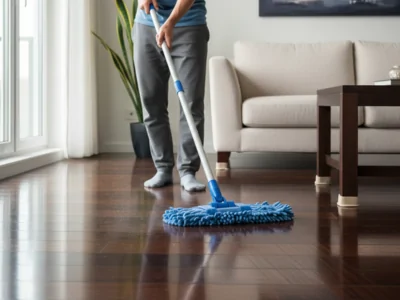
Hardwood floors are a beautiful, timeless feature in any home. Their natural warmth and elegance can elevate the entire look of a room, making them a popular choice for homeowners. However, just like any other flooring material, hardwood floors need proper care to maintain their beauty and longevity. Cleaning them is not only about aesthetics; it’s about preserving the wood’s integrity and ensuring its durability over time.
In this guide, we’ll take you through the essential steps to clean your hardwood floors the right way—without causing damage to the finish or the wood beneath.
1. Gather your cleaning supplies
Before you start cleaning your hardwood floors, gather the following essentials:
- Broom or Vacuum: To sweep up dirt and debris.
- Microfiber Mop or Cloth: A soft, non-abrasive mop is essential for preventing scratches.
- Wood Floor Cleaner: Look for a cleaner specifically formulated for hardwood floors. Avoid harsh chemicals like ammonia, vinegar, or bleach, as these can damage the finish.
- Bucket: To mix your cleaning solution and water.
- Dry Cloth or Towel: For drying the floors after cleaning.
- Dustpan: To collect debris after sweeping.
By using the right tools and products, you’ll avoid damaging your floors and ensure a more effective clean.
2. Sweep or vacuum regularly
Keeping your floors free of dirt, dust, and debris is the first step in preserving their beauty. Dirt and particles can act as abrasives, scratching and dulling the finish over time. Regular sweeping or vacuuming prevents this build-up and helps maintain your floor’s finish.
- Vacuum: Choose a vacuum cleaner with a setting designed for hardwood floors. Be sure to disable the beater bar (the spinning brush) to avoid scratching the wood.
- Broom: If you prefer sweeping, opt for a soft-bristled broom. Start at one corner of the room and work your way out, sweeping in long, even strokes.
To maintain a clean and healthy environment, it’s best to vacuum or sweep your hardwood floors at least once a week. In high-traffic areas, you may need to clean more often.
3. Mop with the right solution
Mopping is essential for deeper cleaning but should be done with caution. Using the wrong cleaning solution or too much water can damage your hardwood floors.
How to mop hardwood floors:
- Use a mild cleaner: Choose a pH-balanced cleaner. Avoid harsh chemicals.
- Dilute properly: Follow the manufacturer’s instructions for the right water-to-cleaner ratio.
- Use a damp mop: Wring out the mop until it’s damp, not soaking wet.
- Mop in sections: Mop in small areas and always follow the wood grain to prevent streaking.
- Dry immediately: After mopping, dry the area with a soft towel.
By following these steps, you’ll ensure your floors are clean without risking water damage.
4. Deep cleaning for stubborn spots
Some spots or stains may require a more targeted approach. If you encounter sticky residue, scuff marks, or other tough spots, try the following techniques:
Removing sticky residue or scuff marks:
- Damp cloth: For light scuff marks or sticky residue, gently rub the area with a damp microfiber cloth in a circular motion.
- Baking soda paste: For stubborn stains, mix baking soda and water to create a paste. Apply it to the spot, let it sit for a few minutes, and then wipe it away with a damp cloth.
- Commercial wood cleaner: For tougher stains, use a specialized wood floor cleaner that breaks down grime without harming the finish.
Removing water stains: Water stains can occur when moisture is left on the floor for too long. To remove them, rub the stained area with a soft cloth dipped in a small amount of mineral spirits or a wood floor restorer. You can also use olive oil to restore shine to the affected area.
5. Prevent damage to your Hardwood Floors
Prevention is just as important as cleaning when it comes to maintaining your hardwood floors. Here are some tips to protect them from everyday wear and tear:
- Use rugs and mats: Place rugs or mats at entryways to trap dirt, sand, and moisture before they reach your hardwood floors.
- Furniture pads: Attach felt pads to the legs of your furniture to prevent scratches when moving or rearranging.
- Avoid high heels: High heels can dent or scratch hardwood floors, so encourage a “shoes-off” policy for guests.
- Trim pet nails: If you have pets, keep their nails trimmed to prevent scratches.
By taking these simple steps, you’ll minimize the risk of long-term damage. Check out our blog on the top causes of hardwood damage.
6. How to buff and shine your Hardwood Floors
Over time, even with regular cleaning, hardwood floors can lose their luster. To restore the shine, you can buff the surface.
Buffing steps:
- Use a buffer: If you have a buffer or polisher, use it to buff the floor and restore its shine. This step is particularly effective after deep cleaning.
- Apply polish: Use a wood floor polish designed for your floor’s finish (wax, polyurethane, etc.). Be sure to apply a product that’s compatible with your floor’s specific finish.
- Buff in circular motions: If buffing by hand, use a clean cloth and rub the polish in circular motions for an even finish.
Regular buffing and polishing will keep your floors gleaming and protected.
7. Know when to refinish your floors
Even with the best care, your hardwood floors will eventually show signs of wear. If they appear scratched or dull despite regular cleaning and buffing, it may be time to refinish them. Refinishing involves sanding down the top layer of wood and applying a fresh coat of finish. This can help restore your floor’s original beauty and protect it for years to come.
If you’re unsure whether refinishing is necessary, contact a professional for advice.
What you should NEVER use on Hardwood Floors?
To avoid damaging your floors, it’s crucial to avoid certain products:
- Steam mops: The heat and moisture from steam mops can damage the finish and warp the wood.
- Excessive water: Never pour water directly onto the floor or use a soaking wet mop.
- Harsh chemicals: Avoid chlorine bleach, ammonia, and pine oil, as these can strip and discolor the finish.
- Oil soaps or wax-based cleaners: These can leave a sticky residue and complicate future refinishing.
- Undiluted vinegar or lemon juice: The acidity can etch and damage the finish over time.
🛡️ Long-term Hardwood Floor protection
Preventing damage is easier than repairing it. Adopt these habits to preserve your floors for decades:
- Use area rugs: Place rugs in hallways, under dining tables, and near entrances.
- Attach felt pads: Install protectors under furniture legs to minimize friction.
- Implement a no-shoes policy: Keep out dirt, pebbles, and water that cause scratches.
- Maintain humidity levels: Keep indoor humidity between 35% and 55% to prevent wood from expanding or cracking.
- Pet care: Trim nails regularly and clean muddy paws right away.
Need help with Hardwood Floor Cleaning? Contact us today!
Are you ready to give your hardwood floors the attention they deserve? Whether you need routine cleaning or a more extensive restoration, Home Bright Carpet + Floor Care is here to help. If you’re searching for expert hardwood floor cleaning in McKinney or the surrounding areas, our team has the tools and expertise to make your floors shine. Don’t wait any longer to make your floors look their best. Schedule an appointment today or call us at 469-615-6624.
Let us help you maintain the beauty of your hardwood floors with our expert care!